Every unforgettable tale, from the sprawling epic to the intimate short story, hinges on a simple truth: characters are the beating heart of narrative. It's not just about what happens to them, but how those events shape who they become. This is the essence of Character Development & Arcs – the transformative journeys that move a character from one state of being to another, forging connections with audiences that last long after the final page or credit. Without a compelling arc, a character risks feeling stagnant, a mere puppet moving through a plot. With one, they become a living, breathing entity, relatable in their struggles and inspiring in their growth.
At a Glance: Your Roadmap to Crafting Unforgettable Characters
- Character arcs are fundamental to powerful storytelling, driving plot, deepening themes, and connecting emotionally with readers.
- Not every character needs an arc, but dynamic characters benefit immensely from well-crafted transformations.
- Explore diverse arc types: From heroes rising (Positive) to anti-heroes falling (Negative), steadfast figures (Flat), or complete internal overhauls (Transformational).
- The Hero's Journey offers a classic framework for epic character evolution.
- Develop arcs systematically: Start with flaws, introduce challenges, integrate emotions, leverage relationships, and align with your story's core themes.
- Avoid common pitfalls like rushed changes or arcs that contradict the established character.
- Focus on relatability and authenticity to make character journeys resonate deeply.
The Unseen Engine: Why Character Arcs Drive Every Great Narrative
Think about the stories that stick with you. It’s rarely just the explosions or plot twists, right? It’s the feeling of walking alongside a character, celebrating their triumphs, mourning their losses, and witnessing their evolution. Character arcs are the invisible force that propels a story forward, giving it emotional weight and thematic depth.
An arc isn't just about a character changing their mind; it’s about a fundamental shift in their beliefs, values, or understanding of the world. This internal journey is intrinsically linked to the external plot. Challenges aren't just obstacles to be overcome; they are crucibles that test a character's resolve and force them to confront their deepest fears and flaws. As they navigate these trials, their arc unfolds, dictating the story's pace, influencing conflict resolution, and illuminating the central messages you want to convey.
While a character’s journey is often one of growth and transformation, it doesn’t always have to be upward. Some of the most poignant and powerful narratives explore the opposite, showcasing a character’s decline or steadfast refusal to change. It's this spectrum of possibilities that makes character development such a rich and vital component of storytelling.
The Many Roads Characters Travel: Understanding Arc Types
Just as there are countless human experiences, there are diverse forms a character's journey can take. Recognizing these common arc types provides a powerful toolkit for writers, helping to shape compelling and purposeful character trajectories.
Positive Arcs: From Flawed to Flourishing
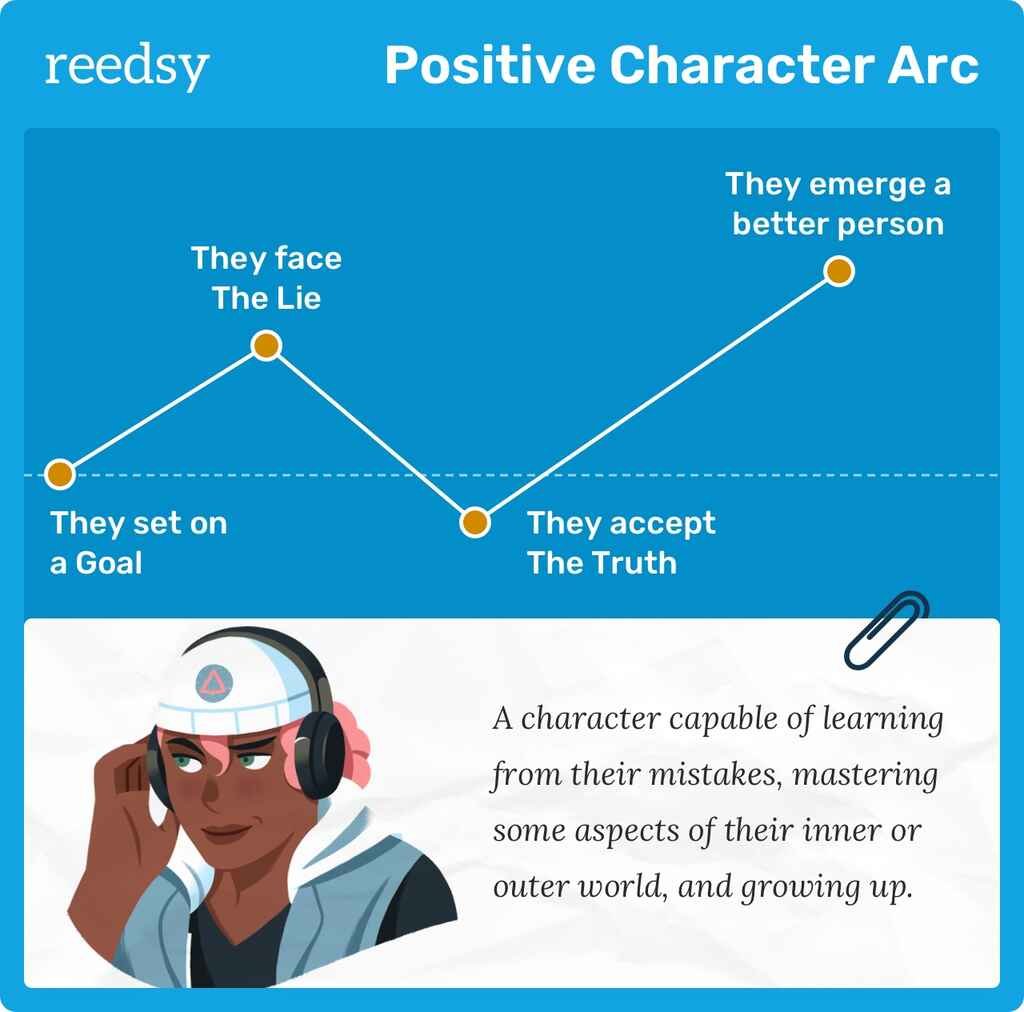
A positive character arc, often called a moral ascending arc, is perhaps the most familiar and often the most heartwarming. It’s the story of redemption, growth, and overcoming significant personal flaws or external obstacles to become a better version of oneself. These characters typically begin from a lower ethical or emotional state and ascend to a higher one.
- What they look like: The character starts with a clear flaw, a misguided belief, or a significant limitation. Through a series of trials and learning experiences, often catalyzed by a "mentor" or a critical event, they confront these issues. Their journey concludes with a satisfying resolution where they've embraced a new truth, righted a wrong, or achieved significant personal growth.
- Key Characteristics:
- Clear Motivation for Change: Something happens early on that plants the seed of dissatisfaction or the need for growth.
- Testing Obstacles: The character faces continuous challenges that force them to reconsider their initial worldview and test their newfound resolve.
- Satisfying Resolution: The arc culminates in a clear demonstration of their growth, often benefiting themselves and others.
- In Action:
- Simba in "The Lion King" starts as a carefree cub who flees responsibility after a tragedy. His arc sees him confronting his past, overcoming guilt, and returning to claim his rightful place as king.
- Jean Valjean in "Les Misérables" transforms from a hardened ex-convict consumed by bitterness into a man defined by compassion and sacrifice.
- Arya Stark from "Game of Thrones" begins as a headstrong noble girl who wants to fight. Her path is brutal, forcing her to shed identities and embrace a deadly skill set, but ultimately she finds her own purpose beyond revenge.
Negative Arcs: The Descent into Darkness
The inverse of a positive arc, a negative character arc (or moral descending arc) explores a character's downward spiral. Here, a character succumbs to their flaws, makes increasingly destructive choices, and often regresses morally from a higher to a lower ethical standing. These arcs can be deeply tragic, cautionary, or even horrifying, showcasing the corrupting influence of power, fear, or unchecked ambition.
- What they look like: The character might begin with noble intentions, a strong moral compass, or even just as an ordinary person. However, a series of poor decisions, temptations, or overwhelming circumstances gradually erodes their principles. They often reject opportunities for redemption, cementing their descent. The ending is typically poignant, tragic, or leaves them as an antagonistic force.
- Key Characteristics:
- Gradual Descent: The change isn't sudden but a slow, often agonizing erosion of their moral code.
- Rejected Redemption: Characters are often presented with chances to turn back, which they pointedly ignore or actively refuse.
- Poignant/Tragic Resolution: The ending highlights the severe consequences of their choices, often at great personal cost or to those around them.
- In Action:
- Walter White in "Breaking Bad" begins as an emasculated high school chemistry teacher diagnosed with cancer. His journey into drug manufacturing is initially framed as a means to provide for his family, but gradually transforms him into the ruthless, ego-driven drug lord, Heisenberg.
- Macbeth in "Macbeth" is a loyal general who, spurred by prophecy and ambition, descends into paranoia and tyranny, committing regicide and multiple murders to secure his power.
- Anakin Skywalker in "Star Wars" is a gifted Jedi Knight whose fear of loss and desire for power lead him down the path of the Dark Side, culminating in his transformation into Darth Vader.
Flat Arcs: Steadfast Anchors in a Shifting World
Not every character needs to change. A flat character arc signifies a character whose core beliefs, values, or personality traits remain largely consistent throughout the narrative, despite external challenges. They aren't static or boring; rather, their unchanging nature serves a crucial purpose within the story. They often act as moral anchors, catalysts for change in others, or a stable point of reference in a chaotic world.
- What they look like: The character is introduced with a strong, unwavering internal compass. Events unfold around them, testing their convictions, but they emerge from these trials fundamentally the same. Their arc isn't about their change, but about how their steadfastness impacts the world and the dynamic characters around them.
- Key Characteristics:
- Unwavering Steadfastness: They maintain their core identity and principles from beginning to end.
- Influence on Others: Their consistent values often challenge or inspire other characters to change.
- Stabilizing Force: They provide a sense of reliability and predictability amidst narrative upheaval.
- In Action:
- Samwise Gamgee in "The Lord of the Rings" remains loyal, kind, and steadfast throughout the arduous journey to Mordor. His unwavering belief in Frodo and his mission helps carry the quest forward.
- Sherlock Holmes consistently applies his brilliant deductive reasoning and logical approach to mysteries, rarely showing significant personal growth or emotional transformation across his many adventures.
- James Bond (in a singular movie narrative) consistently embodies his suave, capable, and mission-focused persona, largely unswayed by the dangers he faces.
- Even within a diverse cast of animated characters, you can find examples of flat arcs providing stability. For instance, you can Meet the Big City Greens characters and observe how some maintain core personality traits that define their role in the show's dynamic.
Transformational Character Arcs: Beyond Surface Deep
While positive arcs show growth, transformational arcs often involve a more profound, almost fundamental, internal metamorphosis. This isn't just about overcoming a flaw; it's about a complete paradigm shift, where a character's entire worldview, belief system, or identity is reshaped. These arcs delve deep into internal conflict, resulting in a character who is fundamentally different from who they were at the start.
- What they look like: The character starts with a deeply entrenched belief system or personality trait that is severely challenged by the narrative. The change is often painful, difficult, and involves shedding old identities or assumptions. The conclusion sees a character who has undergone a significant internal re-wiring.
- In Action:
- Ebenezer Scrooge in "A Christmas Carol" undergoes a complete transformation from a miserly, cold-hearted curmudgeon to a benevolent, joyful, and generous man, entirely changing his outlook on life and humanity.
- Frodo Baggins in "The Lord of the Rings" is fundamentally changed by his quest to carry the One Ring. While he succeeds in his mission, the burden irrevocably alters him, demonstrating a profound internal struggle and a change in his very being.
- Elizabeth Bennet in "Pride and Prejudice" transforms from a woman initially swayed by first impressions and social standing to one who recognizes true character and admits her own errors in judgment, leading to a more enlightened view of love and partnership.
The Hero’s Journey Character Arc: A Universal Blueprint
Joseph Campbell's "monomyth" provides a powerful, universal framework for a transformational character arc, particularly suited for epic tales. It's less a specific type of arc and more a structured pathway that often results in a profound positive or transformational journey. The Hero's Journey delineates a hero's quest through a series of distinct, archetypal stages:
- The Ordinary World: The hero's life before the adventure begins, establishing their normalcy.
- The Call to Adventure: An event or challenge disrupts the ordinary world.
- Refusal of the Call: The hero initially hesitates or rejects the call, often out of fear.
- Meeting the Mentor: A wise figure provides guidance, tools, or confidence.
- Crossing the Threshold: The hero commits to the adventure, entering the unknown world.
- Tests, Allies, and Enemies: The hero faces challenges, builds relationships, and confronts adversaries.
- Approach to the Inmost Cave: The hero prepares for the greatest ordeal.
- The Ordeal (Abyssal Ordeal): The central crisis, where the hero confronts their greatest fear or death itself. This is often the point of highest stakes.
- Reward (Seizing the Sword): The hero survives the ordeal and gains a reward, often a crucial item, knowledge, or reconciliation.
- The Road Back: The hero begins the journey home, but new dangers or chase sequences often arise.
- Resurrection (Transformative Crisis/Apotheosis): A final, powerful confrontation, often a climactic test where the hero applies all they've learned, often dying symbolically or literally to be reborn.
- Return with the Elixir: The hero returns to the ordinary world, transformed and bringing a "boon" (wisdom, healing, peace) that benefits their community or the world.
This framework is highly adaptable and can be seen in countless myths, films, and novels, providing a clear path for a character's growth from innocence to wisdom.
Crafting a Journey: Your Step-by-Step Guide to Character Arcs
Developing a truly compelling character arc isn't about checking boxes; it's an organic process that weaves together internal and external forces. Here's how to approach it thoughtfully:
1. Establish a Clear Starting Point
Every journey needs a beginning. Before your character can change, you need to know who they are, and critically, who they aren't. What are their initial flaws, their misconceptions, their unfulfilled desires, or their crippling limitations? What do they believe to be true that your story will challenge?
- Actionable Tip: Create a character profile that details their initial beliefs, fears, wants, needs, and a defining flaw or lie they believe about the world or themselves. This "lie" is often what their arc will dismantle.
2. Craft Organic Progression
An arc should feel earned, not imposed. Introduce challenges – both internal (self-doubt, moral dilemmas) and external (antagonists, plot obstacles) – that are integral to your character's growth. Each obstacle should chip away at their initial worldview, forcing them to adapt, learn, or make difficult choices.
- Actionable Tip: For each major plot point, ask yourself: "How does this specific event push my character further along their internal journey?" Ensure the sequence of events logically builds towards their transformation.
3. Incorporate Relatable Emotions
Readers connect with characters through shared human experience. Showcase your character’s emotional journey authentically. Allow them to feel confusion, anger, despair, fleeting joy, doubt, and hope. These raw emotions make their struggles universal and their eventual transformation more impactful.
- Actionable Tip: Don't just tell us a character is sad; show it through their actions, internal monologue, or reactions from others. Consider the emotional impact of each turning point on your character.
4. Introduce Pivotal Relationships
No one changes in a vacuum. Key relationships – with mentors, rivals, friends, or even antagonists – are powerful catalysts for character development. A mentor can offer guidance, a friend can provide support, and a rival can force a character to confront their weaknesses. These connections offer new perspectives and contribute significantly to their evolving worldview.
- Actionable Tip: Identify one or two relationships crucial to your character's arc. How does their interaction challenge your character's initial beliefs or support their journey toward change?
5. Align with Themes and Purpose
A character arc shouldn't exist in isolation. It should seamlessly support your narrative's overarching themes and central messages. If your story is about forgiveness, your character's arc might involve learning to forgive themselves or others. If it's about the dangers of unchecked ambition, a negative arc might serve this theme perfectly.
- Actionable Tip: Clearly define your story's main theme. Then, ensure your character's beginning flaw and end transformation directly speak to or illustrate this theme.
6. Balance Complexity
Avoid making your character's journey too straightforward or predictable. Introduce unexpected turns that challenge their comfort zones and force them to grow in unforeseen ways. A character who faces moral grey areas or makes difficult, unpopular choices often feels more real and complex.
- Actionable Tip: Throw a curveball. Just when your character thinks they've figured things out, introduce a twist that forces them to re-evaluate or take an even harder path. This builds tension and depth.
7. Conclude with Satisfying Resolution
The end of the arc isn't just the end of the story; it's the culmination of everything your character has experienced. Provide a resolution that clearly showcases their evolution and its impact. This doesn't always mean a "happy ending," but it should feel earned and consistent with the journey they've taken.
- Actionable Tip: Show, don't just tell, the change. At the story's climax or resolution, have your character make a choice or take an action that directly demonstrates their transformation, proving they are no longer who they were at the start.
Beyond the Basics: Nuances and Pitfalls
While the frameworks above are incredibly useful, truly masterful character development often lies in understanding the subtleties and avoiding common missteps.
When Not to Use an Arc (and Why)
It's a common misconception that every character needs a full-blown arc. As we discussed with flat characters, sometimes consistency is key.
- Providing Stability: A flat character can act as an anchor, a moral compass, or a reliable friend whose unwavering nature highlights the changes in other, more dynamic characters. Think of Samwise Gamgee, whose consistent loyalty makes Frodo’s struggle even more poignant.
- A Thematic Tool: Sometimes, a character who refuses to change, despite all evidence, can serve a powerful thematic purpose, illustrating stubbornness, blindness, or the impossibility of redemption.
- Serving a Specific Role: Minor characters, or those whose function is purely plot-driven (e.g., a messenger, a brief obstacle), may not need an arc. Their role is to facilitate the story or the arcs of others.
The key is intentionality. If a character doesn't have an arc, it should be a deliberate choice that serves the narrative, not an oversight.
Avoiding Rushed or Illogical Arcs
One of the quickest ways to lose a reader is to present a character change that feels unearned or out of nowhere.
- The "Magical Transformation": A character can't simply wake up one day cured of their lifelong flaw without a believable catalyst. The growth must be gradual, with tangible steps and internal struggles.
- The Contradictory Arc: Ensure the character's final state is a logical evolution (or devolution) from their starting point, informed by the events of the story. A character who hates animals at the start shouldn't suddenly become a passionate animal rights activist without significant, shown experiences to drive that change.
- The "Plot Device" Arc: An arc should emerge from the character's internal life and responses to the plot, not simply be forced upon them to conveniently resolve a plot point.
Subtlety vs. Overt Change
While some arcs are grand and dramatic (like Scrooge's), others can be wonderfully subtle. A character might not change their entire worldview, but rather refine a core belief, learn a nuanced lesson, or simply gain a deeper understanding of themselves or others.
- Show, Don't Tell: Instead of telling readers a character is now "brave," show them facing a fear they would have avoided earlier. Let their actions, dialogue, and internal thoughts reveal their transformation.
- Small Moments Matter: A series of small, believable changes often feels more authentic than one massive, sudden shift.
Connecting Arcs to Worldbuilding
A character's journey is often shaped by the world they inhabit, and in turn, their actions can shape that world. How does their environment challenge their beliefs? How do societal norms influence their decisions? And how does their ultimate transformation impact the world around them? This symbiotic relationship adds layers of realism and consequence to your narrative.
Common Questions About Character Arcs
Do all characters need an arc?
No. While dynamic main characters almost always benefit from an arc, flat characters (those who remain largely unchanged) serve vital roles by providing stability, acting as moral compasses, or showcasing unwavering values that influence others. Even in ensemble casts, only a few core characters might have prominent arcs.
What's the difference between character development and character arc?
Character development is the broader term for everything that makes a character feel real and fully formed – their backstory, personality, traits, habits, relationships, and even their appearance. A character arc is a specific part of character development: the journey of change or transformation (or lack thereof, if they're flat) that occurs during the story. All arcs are development, but not all development is an arc.
How long should a character arc take?
A character arc should take as long as it needs to feel authentic and earned within the narrative. For a novel, it might span hundreds of pages. In a short story, it could unfold over a few pivotal scenes. What's crucial is that the progression feels natural, not rushed, and that the character's transformation is adequately motivated and demonstrated.
Can a character have multiple arcs?
Yes, especially in longer series, a character can absolutely have multiple arcs. For example, a character might overcome a personal flaw in one book, only to face a new, larger existential crisis in the next. These can be sequential mini-arcs or a larger overarching arc composed of smaller, resolved journeys. Each arc should build on the previous one, showing continuous growth or new challenges.
Bringing Your Characters to Life: An Actionable Roadmap
Crafting compelling character development and arcs is an iterative process, a blend of planning and discovery. It's where the skeletal structure of your plot gains flesh, blood, and a beating heart. As you embark on your next story, remember that the most powerful narratives aren't just about what happens, but about who it happens to, and who they become because of it.
Take the time to truly understand your characters – not just their actions, but their inner worlds. Map out their starting beliefs and their ultimate transformations. Give them real flaws, significant challenges, and authentic emotional responses. Allow them to stumble, to learn, and to grow. When you do, you won't just be telling a story; you'll be creating a journey that resonates with your audience, leaving them with characters that feel like old friends, whose triumphs and struggles mirror their own. Your readers will thank you for the ride.